
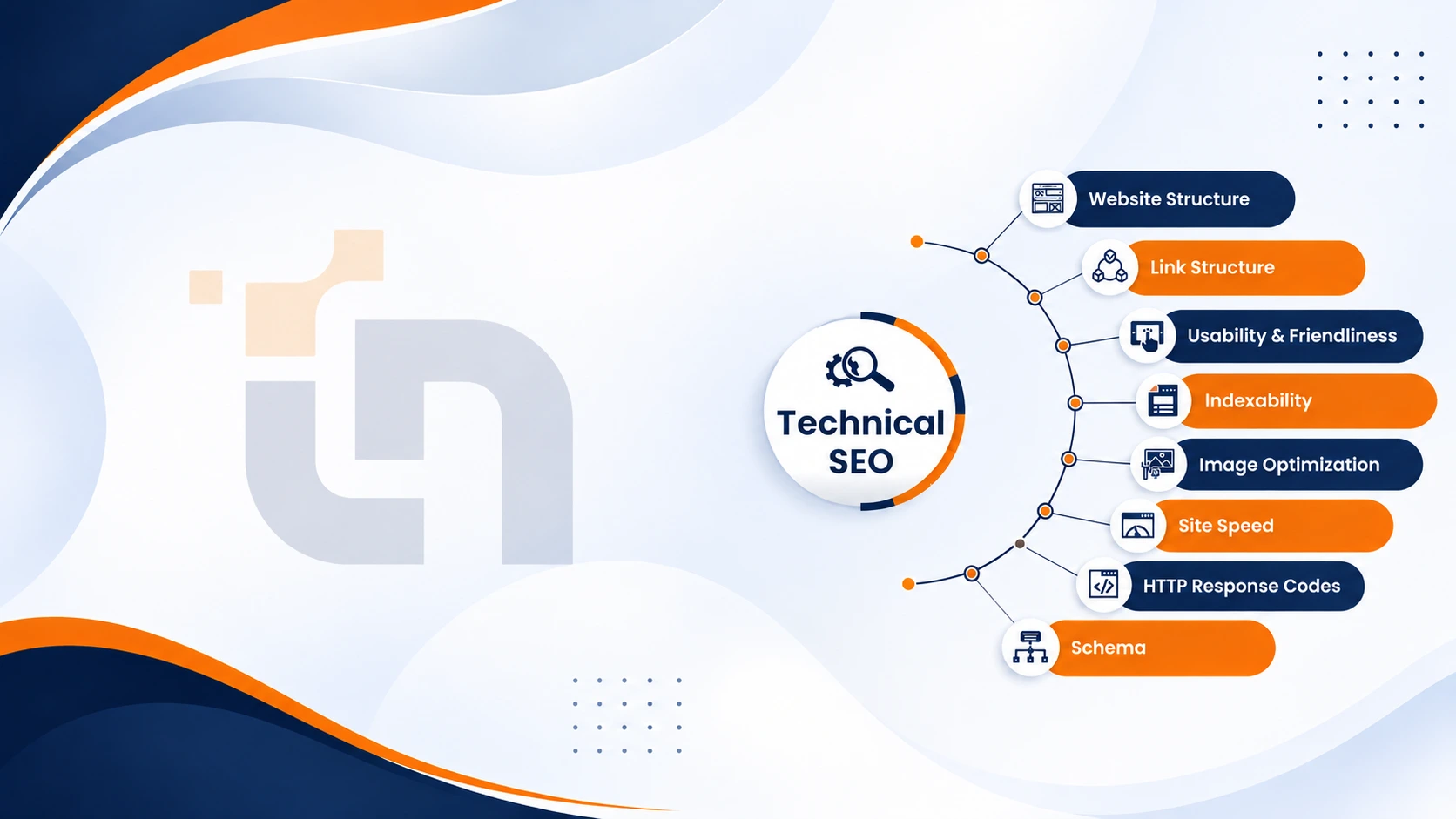
A technical SEO audit UAE businesses can act on is a prioritised diagnosis of why search engines cannot crawl, understand or rank your website as well as they should, delivered with a clear fix list and an owner for each fix. That is the standard to hold every provider to. Anything less, such as a tool-generated PDF with hundreds of unexplained warnings, is a report, not an audit.
If you are reading this, you are probably in the comparison stage. You may have received two or three proposals from agencies, freelancers or a technical SEO consultant in Dubai; they look nothing alike. One promises a "full website technical audit" for a low fixed fee. Another quotes a monthly retainer. A third asks for access to everything before it will discuss price. This guide helps you compare them fairly. It covers what a technical SEO audit should include, which questions separate experienced specialists from template sellers, how to read deliverables and pricing a checklist you can use before you sign.
The advice applies across the UAE. Whether your business is in Dubai, Abu Dhabi, Sharjah, Ajman, Umm Al Quwain, Ras Al Khaimah or Fujairah, search engines assess your site the same way. What changes is the competitive landscape, the languages you publish in, the hosting and infrastructure choices common in the region, how much of your traffic comes from mobile users and from several countries at once.
What Technical SEO Actually Means
Technical SEO is the work of making sure your website can be discovered, crawled, rendered, indexed and delivered quickly to users. It is separate from content and link building, although the three depend on each other. Great articles on a site that Google cannot index will never rank. A fast, clean site with thin content will not rank either.
In practical terms, a website SEO audit with a technical focus tests four things:
Access: Can search engine bots reach your important pages or are they blocked from the right ones?
Understanding: Can they interpret what each page is about, which version is the main one and how pages relate?
Experience: Do pages load quickly, respond smoothly and stay stable on real mobile devices?
Trust: Is the site secure, consistent and free of errors that waste crawl budget or confuse signals?
When these four are healthy, every other SEO investment works harder. When they are not, you can spend months on content and links and see little movement. This is why many UAE businesses commission an audit before starting any ongoing SEO programme and why choosing the right provider matters.
Why UAE Websites Often Need an Audit
Several patterns recur across UAE sites a good provider will recognise them quickly:
Bilingual or multilingual builds: English and Arabic versions, sometimes Russian, Hindi or Chinese, create duplicate-content, hreflang and canonical risks if not set up correctly.
Multi-location structures: Businesses with branches in Dubai, Abu Dhabi and the Northern Emirates often create near-identical location pages that compete with each other.
Heavy design and media: Property, hospitality, retail and luxury sites in the region frequently use large images, video backgrounds and animation, which can harm loading speed and interaction.
Rebuilds and migrations: Companies relaunching websites often redirects, URL structures and tracking are common casualties.
Plugin and script overload: Chat widgets, booking tools, WhatsApp buttons, analytics and ad tags can pile up and slow pages down.
Mobile-first audiences: A large share of UAE searches happen on phones, so mobile performance deserves particular attention.
If any of these describe your site, a structured technical review will almost certainly pay for itself in avoided waste. The next question is how to choose who performs it.
What a Complete Technical SEO Audit Should Include
Scope is where proposals differ most where the biggest surprises appear after signing. When you review technical SEO audit services UAE providers offer, ask for a written list of what will be examined. A thorough audit usually covers the areas below.
Crawlability and Indexability
Website crawlability and indexability decide whether your pages can appear in search at all. A provider should check:
Robots.txt rules whether they accidentally block important sections, scripts or stylesheets.
XML sitemaps: whether they list only indexable, canonical, 200-status URLs and are submitted correctly.
Index coverage: how many pages are indexed compared with how many should be why the rest are excluded.
Meta robots and X-Robots-Tag directives, including stray noindex tags left over from staging sites.
Crawl depth and internal linking, so important pages are reachable in a few clicks.
Crawl waste from faceted navigation, filters, internal search results and parameter URLs.
JavaScript rendering: whether content and links load for bots, not only for human visitors.
Google Search Console and Analytics Review
Google Search Console is the most reliable source of truth about how Google sees your site, so a serious audit starts there. Expect the provider to review the Pages (indexing) report, crawl stats, sitemaps, manual action and security notices, structured data enhancements and the Core Web Vitals report. They should also check that Search Console and analytics are properly verified, that data is flowing and that conversion tracking works. If a provider does not ask for Search Console access, treat it as a warning sign.
Core Web Vitals and Page Experience
Core Web Vitals measure real user experience. Google's published thresholds for a good experience are a Largest Contentful Paint of 2.5 seconds or less, an Interaction to Next Paint of 200 milliseconds or less and a Cumulative Layout Shift of 0.1 or less, assessed at the 75th percentile of page views, as explained on web.dev. A competent audit separates two kinds of data:
Field data: what real visitors experienced, from the Chrome User Experience Report and Search Console.
Lab data: simulated tests from tools such as Lighthouse and PageSpeed Insights, useful for diagnosing causes.
The provider should explain which template or page type is failing, not just report a sitewide score. That is the difference between a vague recommendation to "improve speed" and a useful instruction such as "compress and properly size the hero image on all service pages and defer the third-party chat script". If website performance optimization UAE work is part of your goal, check whether the provider will diagnose only, or also help implement.
Site Architecture, URLs and Internal Linking
Structure tells search engines which pages matter. The audit should assess URL patterns, category and service hierarchy, breadcrumb navigation, pagination, orphan pages, redirect chains and loops, broken internal links and how link equity flows to your commercial pages.
International, Language and Location Setup
For UAE businesses this deserves its own check. Review hreflang tags for English and Arabic versions, right-to-left rendering, language-specific URLs, canonical consistency between versions and the handling of multiple location pages across emirates. Poor setup can cause the wrong version to rank or both to compete.
Security, Hosting and Server Health
Check HTTPS implementation, mixed content, security headers, server response times, uptime, status code errors, hosting location and use of a content delivery network. For a UAE audience, server response and delivery speed from nearby regions can affect real user experience.
A provider offering a website technical audit in Dubai or an SEO site audit in Abu Dhabi should be able to map its checklist to a table like this one and show a sample report that proves it.
Freelancer, Consultant or Agency: Which Provider Type Fits?
Before you compare individual names, decide which type of provider suits your situation. Each can deliver a good audit each has predictable strengths and limits.
The central question is whether you need a diagnosis or a delivered outcome. A report that sits unread in a shared folder produces nothing. If you do not have developers to implement fixes, favour a provider that works with your web team or offers development support, such as an agency that combines SEO services with web development.
Questions to Ask Before You Hire
The quality of a provider shows in how it answers specific questions. Use the lists below in your discovery calls to ask for answers in writing so you can compare proposals line by line.
Questions About Scope and Method
What exactly will you audit what is excluded? Ask for the checklist. Be wary of vague phrases like "full audit" with no itemisation.
Which tools do you use? How do you validate their output? Crawlers and speed tools generate false positives. An expert separates real problems from noise.
Will you review our Google Search Console and analytics data, not only a crawl? The answer should be yes.
How do you handle JavaScript-heavy or headless sites? This matters if your site uses modern frameworks.
How do you assess Arabic and English versions? Look for hreflang, canonical and rendering checks.
How many URLs will you crawl and how will you prioritize a large site? A sensible provider samples templates instead of reading thousands of pages manually.
Questions About Deliverables
Can we see a sample audit, with client details removed? The sample reveals depth, clarity and prioritisation.
How are findings prioritised? Good audits rank issues by impact and effort, not alphabetically.
Will each issue include evidence, affected URLs and a recommended fix? Developers need specifics.
Is there a walkthrough call? A live session helps your team understand and question the findings.
Do you provide a roadmap? The best audits end with a sequenced action plan.
Questions About Experience and Results
Which UAE or GCC sites have you worked on in which sectors? Sector experience in property, e-commerce, healthcare, hospitality or B2B services can help.
Can you show before-and-after evidence? Look for indexation improvements, error reductions, Core Web Vitals gains and, where relevant, traffic and lead changes over a sensible period.
Who will perform the audit? Confirm whether the person who pitches is the person who works.
Can we speak to a recent client? Willingness to provide references is a good signal.
Deliverables, Timelines and Costs
What You Should Receive
A professional audit should arrive as more than a spreadsheet export. Look for these deliverables in the proposal:
An executive summary in plain language that a non-technical decision maker can read in five minutes.
A prioritised issue log listing each problem, its severity, affected URLs, evidence and the recommended fix.
Supporting data files, such as crawl exports and Search Console extracts, so your team can verify findings.
A Core Web Vitals diagnosis by page template, with causes and specific fixes.
A sequenced roadmap that groups fixes into quick wins, medium projects and structural changes.
A walkthrough session with your marketing and development teams.
A re-check after fixes, or a clear statement of when it is available and what it costs.
Understanding Costs
Published pricing for standalone technical audits in the UAE is thin; what exists is often marketing-led, so treat any single figure with caution. One Dubai pricing guide lists indicative monthly SEO retainers of roughly AED 4,500 to AED 15,000 depending on tier, with a website audit included inside those packages notes that its figures are for indicative purposes only, according to Global Media Insight. A one-off audit is normally quoted separately and priced by the work involved. The factors below move the quote more than any headline rate:
Site size and number of templates: A 50-page service site and a 50,000-URL marketplace are very different projects.
Technology stack: JavaScript frameworks, headless builds and custom platforms take longer to diagnose than standard CMS sites.
Languages and locations: Arabic and English versions, plus multiple emirate pages, multiply the checks.
Depth of performance work: Diagnosing Core Web Vitals by template takes more effort than running a single speed test.
Seniority of the person doing the work: Senior specialists cost more and usually find more.
Implementation support: Fixing issues, working with developers and validating results add to the price.
Data access: Missing Search Console history or analytics gaps can increase effort.
The useful comparison is cost per outcome, not cost per page of report. A cheaper audit that your developers cannot act on is more expensive in the end. Ask every provider to state in writing what the fee covers, what it excludes, whether VAT applies and what extra work would trigger additional charges.
One-Off Audit or Ongoing Retainer?
An audit suits businesses that need a diagnosis, have developers ready to fix and want to decide next steps with evidence. A retainer suits businesses that want continuous monitoring, regular fixes and ongoing growth. Many companies start with an audit and then move into a broader programme such as SEO services once priorities are clear. That sequence limits risk because you test the provider's quality before committing to a longer relationship.
Evaluation Checklist for Shortlisting Providers
Use this checklist to score each provider from 1 to 5 on every line, then weigh the lines that matter most to your business. A provider that scores well across the board and shows strength in the areas critical to you is a safer choice than one that is brilliant in one area and weak in others.
Clear written scope: Every audit area is itemised, with exclusions stated.
Search Console and analytics access requested: The audit is based on real data, not only a crawl.
Sample report provided: It shows evidence, prioritisation and fixes, not just tool screenshots.
Core Web Vitals handled properly: Field and lab data are separated and issues are traced to page templates.
Crawlability and indexability depth: The provider explains how it will find and fix blocked, excluded and duplicate pages.
Bilingual and multi-location experience: Arabic and English, hreflang and emirate-level pages are covered.
Named team members: You know who will do the work and their experience.
UAE or GCC references: Relevant case studies or client contacts are available.
Implementation path: Either the provider fixes issues or has a clear handover process for your developers.
Measurement plan: Success metrics and a re-check are defined.
Transparent commercials: Fee, VAT, exclusions and change triggers are written down.
No lock-in: A one-off audit does not force a retainer.
Reasonable promises: No guaranteed rankings or timelines that ignore your site's condition.
Red Flags
Guaranteed first-page rankings: No one controls Google's results technical fixes alone do not guarantee position.
Automated reports sold as audits: A branded export from a crawling tool with no human analysis is not an audit.
No questions about your business: A good specialist asks about goals, revenue pages, platform, previous migrations and developer resources.
Refusal to share a sample: If nothing can be shown, you cannot judge quality.
Requests for excessive access. Ask for read access where possible, never share more than the audit needs.
Fear-based selling: Long lists of "critical errors" without context or impact estimates are meant to scare, not to inform.
Hidden implementation costs: A cheap audit that leads to expensive, unspecified follow-on work should be questioned.
Ignoring user experience: Technical SEO that disregards design, usability and conversion misses the point. Strong UI/UX design and technical health work together.
UAE-Specific Points to Raise With Any Provider
A provider who works regularly in the region should raise several of these without being asked:
Arabic and right-to-left support: Layout, fonts, metadata and structured data should work correctly in both directions and both languages.
Mobile-first behaviour: Test on mid-range mobile devices and typical UAE network conditions, not only on a fast office connection.
Hosting and delivery: Discuss server location, CDN configuration and response times for visitors in the UAE and wider GCC.
Local and multi-emirate presence: If you serve several emirates, ask how location pages, Google Business Profile and local signals will be structured. A related service such as local SEO can support this.
Seasonal traffic spikes: Ramadan, Eid, Dubai Shopping Festival, White Friday and National Day can stress servers and expose slow pages when it matters most.
Regulated sectors: Real estate, healthcare, finance and education sites may have content or disclosure requirements that affect templates and structured data.
Cross-border audiences: If you target the wider GCC, ask about regional targeting and currency or language switching.
The providers worth shortlisting for a technical SEO audit in the UAE discuss these topics in specifics, with examples from comparable sites not in generalities.
How InLinkers Digital Solution Approaches Technical SEO
At InLinkers Digital Solution, we treat a technical audit as the start of a fix list, not the end of a report. Our team reviews crawlability, indexability, Google Search Console data, Core Web Vitals, structure and bilingual setup, then ranks every issue by impact and effort so your developers know what to do first. We work with businesses across Dubai, Abu Dhabi and the other emirates. We can either hand findings to your web team or help implement them.
If you want a specialist view before choosing a provider, explore our SEO services or ask for a consultation through our contact page. Because our work spans web development and UI/UX design, technical fixes and user experience are planned together.
Final Thoughts
Choosing a technical SEO audit UAE provider comes down to evidence. Ask for a written scope, a sample report, named experts, realistic timelines and transparent fees. Prefer the provider that explains trade-offs and shows how fixes will be implemented and measured, not the one that promises rankings. Use the checklist above to compare two or three options side by side and decide with data.